
Reading Svolvær history from the harbour
Svolvær history is closely tied to fishing, processing and trade. The town belongs to Vågan on Austvågøya in the eastern Lofoten Islands, between the mountains and the sea. Its first formal town status dates to 1918. That date is a useful landmark, but the more revealing starting point for a visit is the harbour: fishing and transport remain part of the town's present, alongside tourism, art and public services.
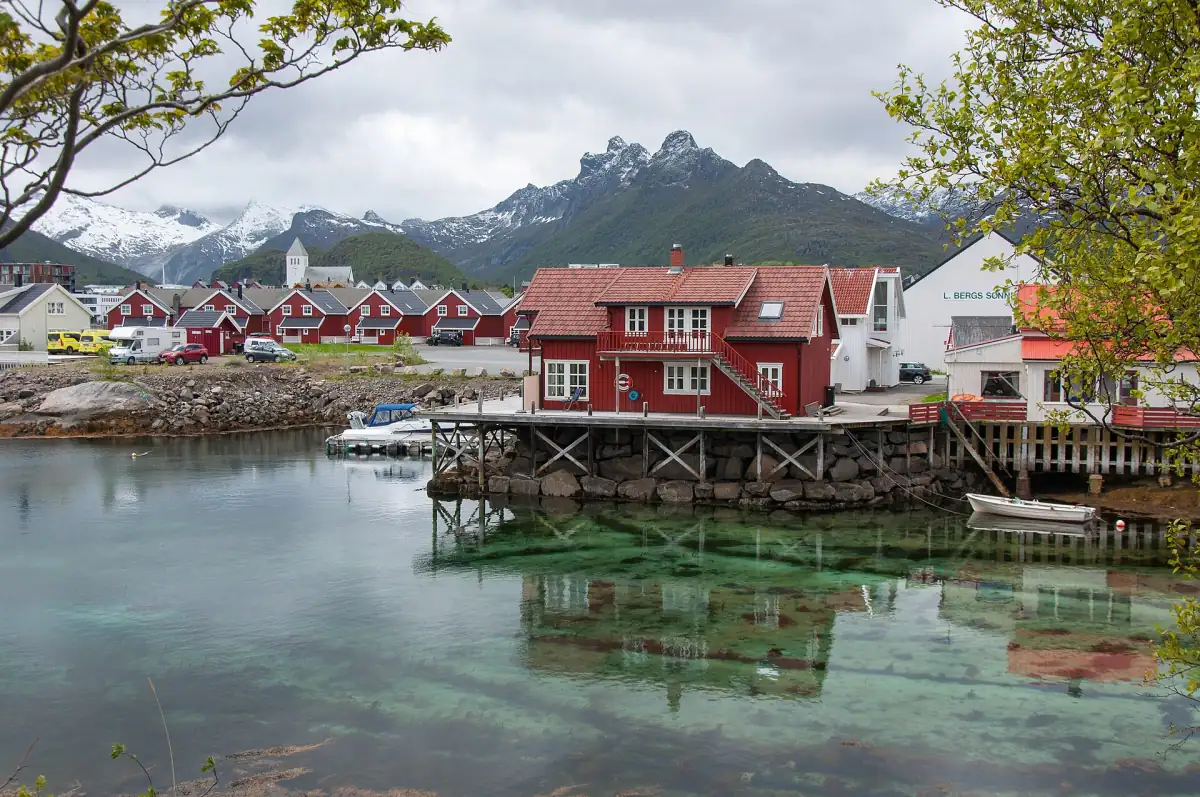
Look at the waterfront as a place with different jobs rather than as a single preserved historic district. Svinøya brings fishing cabins, houses, quays and fish reception facilities into the same setting. New and older buildings coexist there. A history-focused visit can connect this everyday coastal scene with the displays at Storvågan, instead of treating every red wooden building as a museum.
For a first orientation, use the Svolvær sights guide, then decide which historical theme interests you most. Fishing heritage, coastal settlement and the Second World War call for different visits. Leaving space between them makes it easier to give each subject the attention it deserves.
Stockfish and the seasonal fishing economy
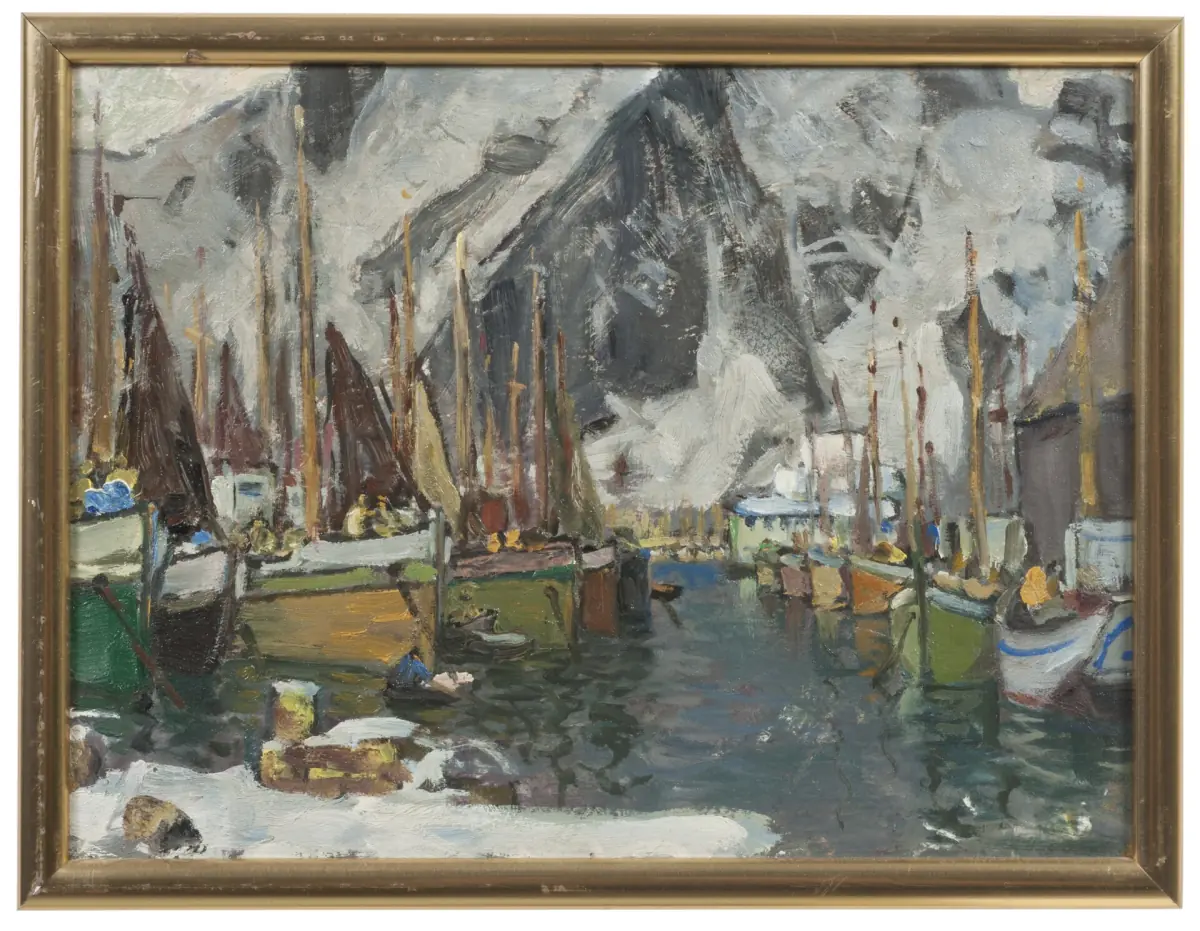
Stockfish was an important export over centuries. The wooden racks used to dry cod belong to that story, linking the catch to processing and trade. The seasonal skrei fishery runs from January to April, when cod migrate from the Barents Sea to spawn in the Vestfjord. This connection between a natural cycle and work on shore helps explain why fishing belongs at the centre of a coastal history visit.
Working boats, fish reception areas and drying grounds need room for their actual purpose. Observe from suitable public areas and leave operational spaces to those working there. For a visitor experience on the water, the fishing trips guide separates equipment and boat arrangements from the seasonal background. Museum displays offer another way to understand the industry without entering a workplace.
Our pick: history and photography
Our take: This history-themed photo outing includes private transportation.
Hand-picked tours, booked through Viator. Prices are indicative starting prices in euros (as of November 2026). Tap a tour for live availability and the current price in your currency.
Henningsvær and Svinøya through a history and photo outing
This excursion links two coastal settings, with private transportation included. Plan museum visits separately from the sightseeing outing.
Rorbuer and the waterfront at Svinøya
A rorbu is a fishing cabin; rorbuer is the plural. The term connects accommodation with the region's fishing heritage, but present-day stays include both simple and more modern versions. Choose a cabin for its actual location and facilities, rather than treating the name as proof of an original historic interior. The accommodation guide explains how Svinøya compares with the centre and nearby bases.
The history and photo excursion to Henningsvær and Svinøya provides a way to put coastal scenes into the same outing from Svolvær. Its included service is private transportation. Keep a museum visit as a separate part of your programme rather than building your day around an assumed admission or museum tour. If the buildings and waterfront are your main interest, allow time to look carefully instead of collecting only distant landscape photographs.
Connect Svolvær with Vágar and Storvågan
The wider coastal story continues near Kabelvåg. Lofotmuseet stands at the site of medieval Vágar in Storvågan, with a main building dating from 1815, historical fishing cabins and boathouses. This is a distinct destination from Svolvær harbour. Together, the two places let you consider the working town and a museum setting without collapsing their histories into one location.
Storvågan's SKREI complex brings together fishing, trade and coastal culture through Otolitten, Lofotmuseet, Galleri Espolin and Lofotakvariet. Lofotmuseet reopened on 1 May 2026. Otolitten began operating on 30 June 2026 and officially opened on 19 September 2026. For a visit on 9 or 10 November 2026, the main Med Havet exhibition in Otolitten is closed for maintenance; that notice ends on 10 November and concerns that exhibition rather than the entire complex.
Make the journey part of a focused visit to Kabelvåg, Storvågan and Henningsvær. Choose the particular museum or gallery that matches your interest and leave time for it. The aquarium closes in December and January, so a winter cultural day needs a different balance.
The Second World War as a separate museum visit
Lofoten Krigsminnemuseum in central Svolvær documents the Second World War, with a focus on Lofoten and Northern Norway. Approach it as a historical collection deserving its own time. Its subject differs from the fishing cabins, coastal views and stockfish story, even if you include these interests within the same stay.
Plan the museum visit independently from a leisure photography outing. For travel between the town and nearby cultural sites, the transport guide explains the local connections and the role of the road network. Keeping the town as your base lets you choose individual visits around your interests rather than trying to fit every aspect of regional history into one excursion.
Questions about Svolvær's past
When did Svolvær first receive town status?
Its first formal town status dates to 1918. The harbour and fishing economy provide the context for understanding the town beyond that single date.
Where can I see historical fishing cabins?
Lofotmuseet at Storvågan presents historical rorbuer and boathouses. Svinøya also has fishing cabins among working quays and newer buildings, so distinguish a museum visit from an inhabited waterfront.
What is included in the history and photo excursion?
Private transportation is included for the outing to Henningsvær and Svinøya. Arrange museum visits as separate activities according to your interests and the relevant visitor opening schedule.